How the Antiques and Vintage Market is Evolving
Join me in this week’s Antiques Central blog as we reveal how the antiques and vintage trade is evolving in the face of younger dealers and buyers entering the market.
If you would prefer to watch the podcast on the Antiques Central YouTube channel, click HERE.
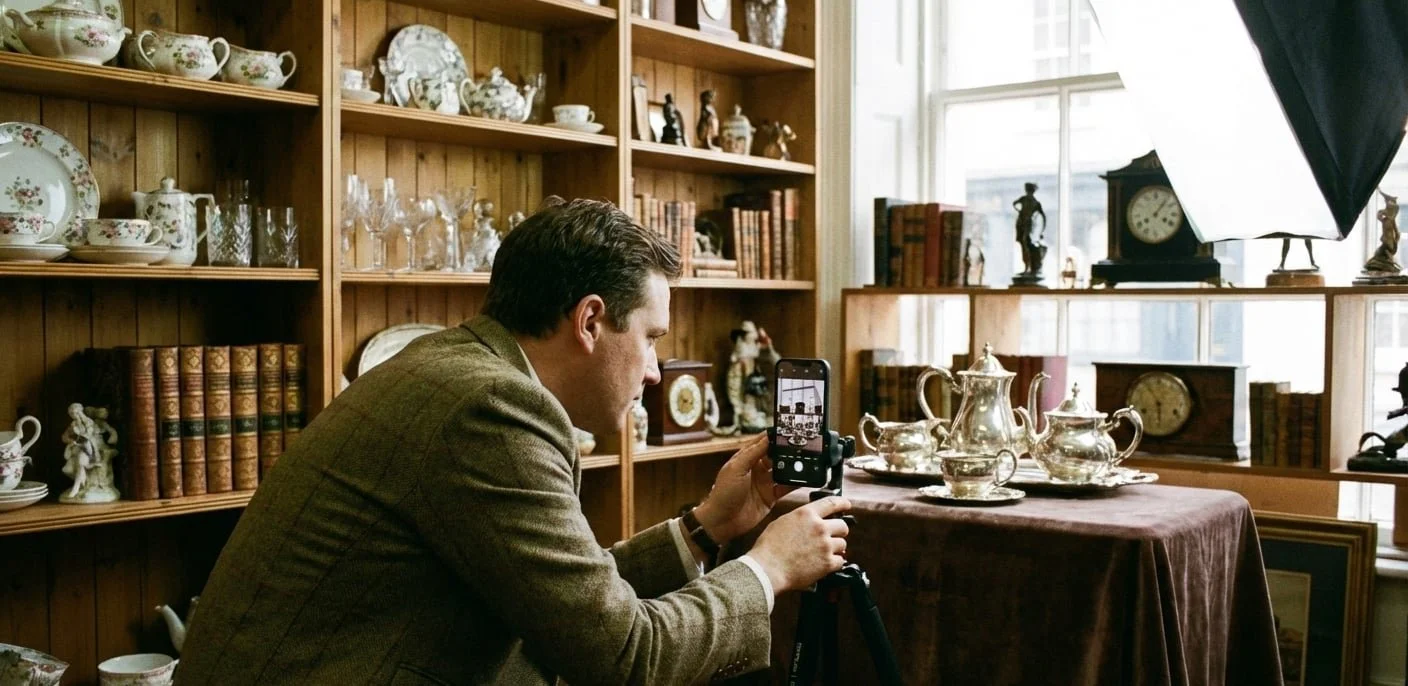
Modern antiques dealing increasingly blends traditional knowledge with digital platforms, reshaping how buyers discover, value and purchase vintage objects.
A Misunderstood Transformation
Before we go any further, let’s clear up one urban myth: the antiques and vintage trade is not fading quietly into obscurity — what it’s doing is undergoing one of the sharpest, most misunderstood transformations, or evolutions if you prefer, in its recent history.
What I’m experiencing is this.
While some dealers cling to the old ways of doing things and moan about decline, a new reality, driven by the younger generation, is forming around them, fuelled by shifting buyer psychology, global demand, technology and digital platforms.
To address this contradiction between the old and the new, I’ve done some research - and I can now present to you, the six most relevant questions people in the trade are asking, right now — these are the questions that cut through the noise, question our business reality and force us, the trade, to confront where we’re headed next.
So, today, we’re exploring the potential for, ‘market growth and economic opportunity in the antiques and vintage trade.
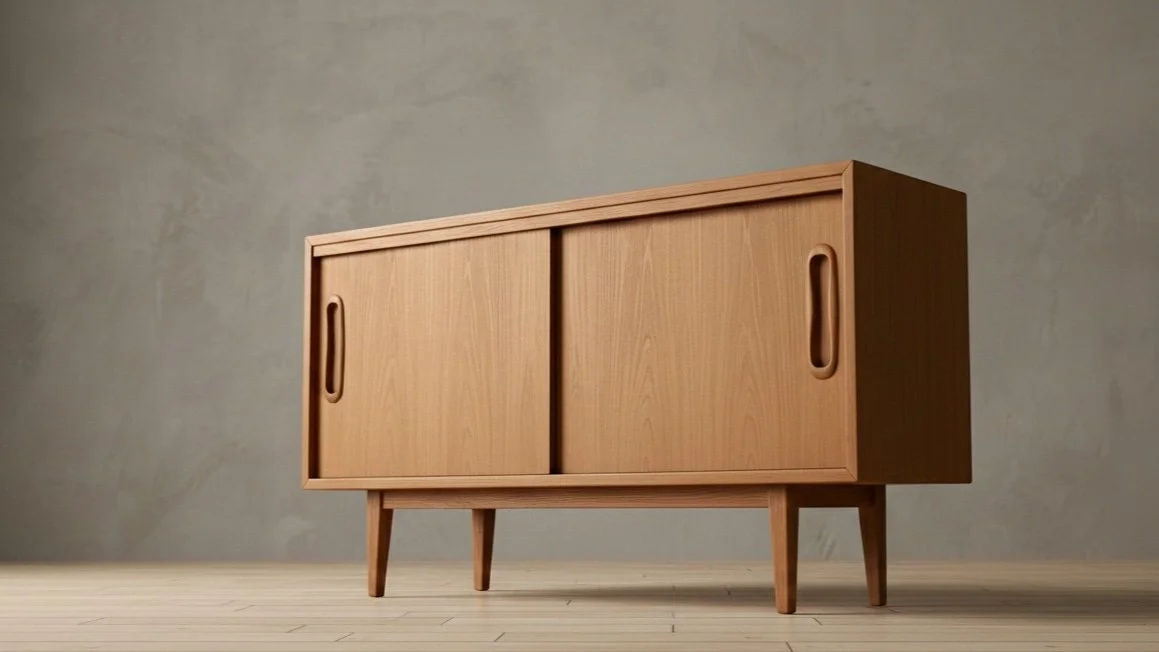
Design-led antiques and vintage pieces with strong narrative, provenance and visual relevance continue to perform in a polarised antiques market.
Is the market Growing?
Here’s the first, most commonly asked question I could find when I did my research.
“Is the antiques and vintage market genuinely growing with fresh buyers and new money coming in — or are we, as dealers, just convincing ourselves it is because we’re seeing more social media posts, more selling platforms on-line and the same old stock changing hands?”
Let me be clear on my opinion right from the outset.
Based on my research, the market is not dying or even declining.
However, what is disappearing is lazy sourcing, blind nostalgia and the outdated assumption that antiques should behave exactly as they did twenty years ago.
In my opinion, growth still exists but it has changed shape, direction and comes with a different expectation – particularly for the younger up and coming generation of dealers.
We are no longer operating in a world where in isolation, quantity equals success - and what I mean by that is; ‘volume without curation’ is now a weakness, not a strength.
So, based on available data, the market appears to be polarising - or splitting into two distinct camps.
At the bottom end of the market, the sale of poorly presented, generic, over-supplied items is stalling.
At the top end of the market, well-chosen pieces with design relevance, rarity and narrative are experiencing stable or even rising demand.
Mid-century design, brutalism, studio ceramics, campaign furniture, industrial heritage and functional decorative objects continue to perform well because they align with contemporary interior design trends, modern psychology and en-vogue or ‘fashionable’ storytelling.
None of these niches are dusty remnants from the past. They’ve all become cultural anchors repurposed for today’s living requirements.
And herein, I believe, lies a misunderstanding which is deeply rooted in perception.
Many ‘old skool’ dealers confuse slower traditional shop footfall with overall collapse.
In my humble opinion- and I may be wrong of course - that is a basic failure of observation.
The footfall and money haven’t vanished! They’ve migrated to digital spaces, private collectors, interior designers and a younger generation who value originality over landfill tat and reproductions. So, if your stock still mirrors what sold in 2005, you’re not unlucky. You’re basically, strategically obsolete.
So, growth is happening - but only for those prepared to track demand rather than romanticise the past.
And the uncomfortable truth?
The evolution of the trade doesn't ask you for permission – it just happens and quickly passes you by unless you analyse and respond to market trends!
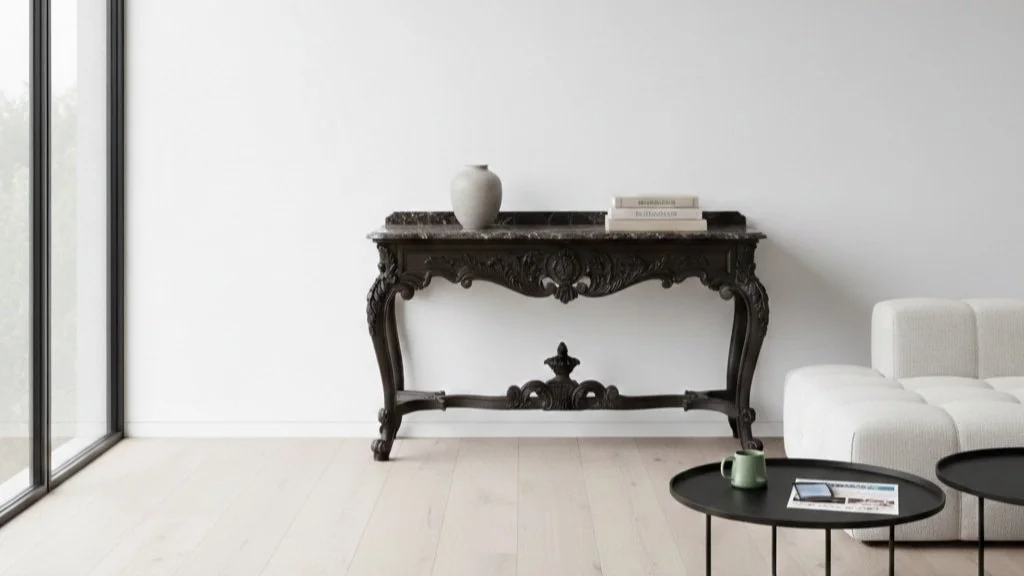
Younger buyers engage with antiques through modern interiors, social media storytelling and design-focused presentation rather than traditional antique centres.
Are The Younger Generation Interested In Antiques
Our next most commonly asked question is …
"Are the younger generation even vaguely interested in antiques anymore, or as dealers are we kidding ourselves they are? Is there a genuine new generation of dealers and buyers coming through or is this an ageing market, propped up by the same old faces and slowly shrinking as they disappear?”
In my opinion, yes, younger buyers are interested in antiques - and perhaps more importantly, they’re particularly interested in design led vintage items.
However, I have to admit it’s true that younger buyers don’t generally think like stereotypical collectors. And I think that’s where many traditional, established dealers miss the point.
The younger demographic of buyers is driven by identity expression, sustainability, uniqueness and visual impact. They don’t care whether an item qualifies as ‘true antique’ under an imposed and rigid technical definition. They care whether it feels authentic, visually distinctive and meaningful within their own unique world and whether we like it or not, social media platforms have played their part in transforming the way value is perceived.
For example, a 19th-century console table might sit unsold for years in a shop but sell instantly if styled correctly in a modern interior setting on Instagram.
The sharp lesson is - Context creates desire. Presentation builds narrative ... and narrative sells, especially to the younger generation! In this respect, it’s true that young people aren’t therefore visiting traditional antique centres in their droves. But they are out there – they’re just somewhere else. They’re discovering their pieces via reels, Pinterest boards, YouTube walkthroughs, hauls and styled home tours. Therefore, if your business exists only in a physical space without digital storytelling, I’m afraid to break the news to you - that you are completely invisible to them!
So, based on my research, the evidence points to the fact that this is not an ageing market. It is a misinterpreted one. Buyers still exist, including the misunderstood younger generation.
The question you have to ask yourself is, whether you are speaking their language or shouting into yesterday’s vacuum?
Is The Antiques Business A Gamble?
The next most commonly asked question I think is really interesting.
“Given the economic climate we’re all operating in — rising costs, tighter spending and a lot of uncertainty — is the antiques and vintage business starting to feel like a gamble? Is it still a sensible trade to get into or stay in or has the risk tipped too far for anyone without deep pockets or decades of experience?”
Well, it doesn’t take a genius to realise that every economic downturn exposes weaknesses. The current economic downturn is doing so at speed and let’s face it, with little or no mercy or consideration for those dealers, who I’ve pointed out already, are not evolving with market trends.
Costs are rising.
Consumer caution has increased.
Impulse spending has tightened ...
and - while in my opinion the business risk itself has not necessarily expanded — I do agree it has become more visible – and what do I mean by that?
Well, I don’t think anyone can argue that transparency now dominates the marketplace. Just take a look online, where for example, website and auction comparisons often highlight inflated or speculative pricing intended to exploit naïve or ill-prepared buyers. As well as that, badly run antiques and vintage businesses stand out like a sore thumb, especially with misleading listings, inefficient customer service and poor communication ... and this is now often reflected in Google reviews and customer feedback that anyone can access before committing to making a purchase.
Don’t say I didn’t warn you!
At the same time, strong, efficient and forward thinking businesses are not struggling in an industry vacuum. They are adjusting purchasing policies, refining stock flow, reducing dead weight inventory and strengthening brand identity. They are not gambling on hope. They are deliberately engineering resilience into their business. The weakest, most vulnerable businesses rely on inconsistent sourcing, sentimental purchasing, bloated overheads and emotional attachment to stock. These models will always fail in tightening economies, especially in recession.
This is not news to seasoned economists. It’s simply confirming their brutal rules and is unforgiving to say the least! So, what I’m saying is, recession or economic downturns doesn’t erase opportunity. It relocates it. Those businesses with strategy, control and clarity expand quietly proving that market awareness, research and the use of technology brushes aside complacency.
So, if your operation depends on nostalgia and luck - yes, risk is rising.
If your business is built on strategic thinking, precise research and industry foresight, the current challenging economic landscape can become an advantage.
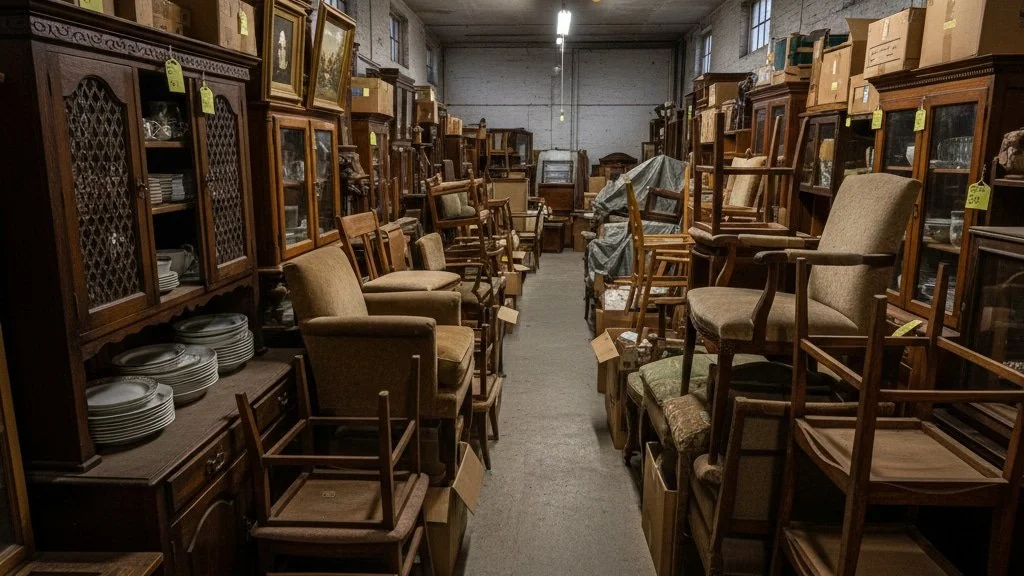
Economic pressure is exposing inefficient antiques businesses, while disciplined dealers adapt through smarter sourcing, pricing and inventory control.
Rising Or Falling In Value?
Our next most commonly asked question is subtle - and some of you might say obvious - but it’s really important if you’re dealing in antiques and vintage.
"I’ve been in the trade long enough to know that some pieces I buy fly off the shelf and even double or triple in value, while others, just as old or as well-made, barely get a second glance. So, what’s really making the difference here? Is it the story behind the item, the rarity, the craftsmanship or just changing tastes in the market - and more importantly, how can I, as a dealer, spot the pieces that are actually going to appreciate and avoid the ones that will just gather dust?"
Let’s start the answer to this question by removing the all-important element of ‘fantasy’.
Value growth is traditionally driven by a combination of scarcity, condition, cultural relevance, provenance - and that most elusive factor - timing. I’d suggest to you that ‘emotion’ plays no role in market price movement beyond let’s say, its somewhat sketchy influence it can have on trends? And what do I mean by that?
Well, I would propose that objects rise in value when they reconnect with current aesthetics or even tap into generational nostalgia - like action figures or comics. I was always told as a golden rule, that items come back into fashion about thirty years after they first appeared as a result of nostalgic adults wanting to buy back or own their childhood? So, putting my money where my mouth is, we’ll see how I get on with my own personal investment made twenty years ago, into carded, mint condition 1980’s action figures! I’ll let you know whether I make any money or not in about ten years' time!
Setting my personal investment woes to one side, items linked to strong craftsmanship, cultural nostalgia, historical narrative or design movements that cycle back into favour seem to perform strongest in the current market – Mid Century Modern being a perfect current example.
So, what I’m saying is - the idea that everything ‘old’ automatically gains value over time is commercially naïve. How many of you are sat on ‘old friends’ that have been stored for years while you wait for the buyer at the end of the rainbow to come along and pay you that dream price?! I’d hazard a guess it’s quite a few of you … me included! The big question therefore, is what items will increase in value?
In my opinion, pieces that appreciate in value aren’t necessarily rare or scarce – they usually sit at the intersection of rarity and cultural desirability. In other words, scarcity without demand translates into storage. Demand without scarcity can be temporary hype and these trends can come to an end in an instant. I always think back to the time I got stuck with thirty Victorian school desks after everyone who wanted a desk had bought one. Luckily, they were still in demand, in Belgium of all places - and I was able to sell the job lot to a Belgian dealer on his annual buying trip to the UK.
Lucky me!
So, what I’m saying is - sustainable price appreciation lives where scarcity, quality and demand merge – and not in short term transient fads or trends. It’s also true to say that design cycles recycle constantly. What was ignored twenty years ago may become essential today, when taste-gurus or Tik Tok influencers reframe it.
So, sustainable interior design movements, architectural influences, cinematography and social nostalgia can all shape perceived worth. The trick is to distinguish the sustainable from the transient – and therein can lie the difference between the citizen dealer taking a punt based on antiques TV programmes and the well-researched professional dealer who has studied the market over many years.
So, if your valuation method relies on TV sound bites, sentiment or assumption, you are speculating - not trading.
In contrast - and in defence of experienced dealers - years of experience, knowledge and research can build leverage which combined with observation and research into market trends can create or generate profit.
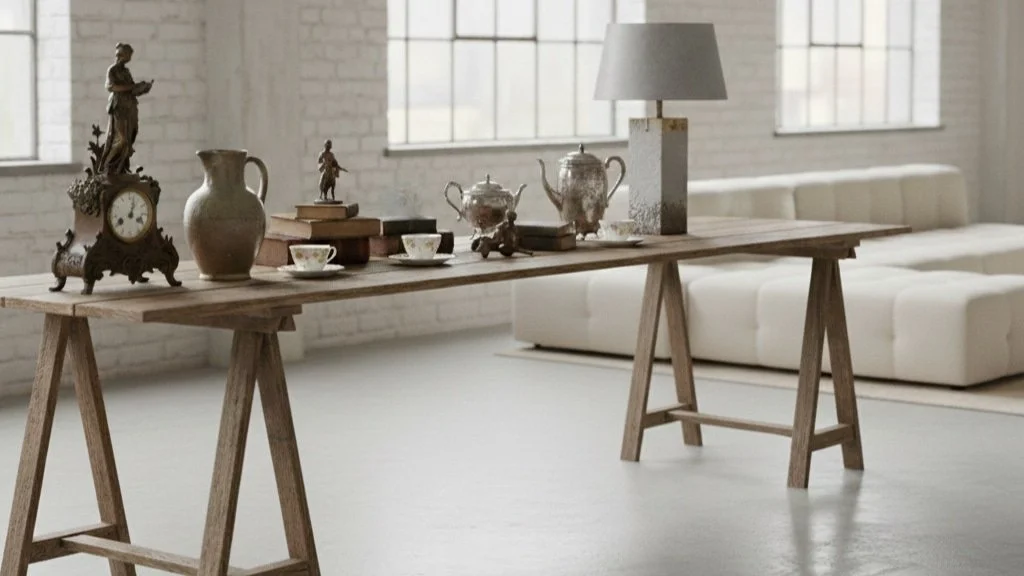
Antique values rise where scarcity, craftsmanship and cultural relevance intersect — not simply because an object is old.
Is On-line Selling Helping The Trade?
Coming in at number five in our list of most commonly asked questions is …
"I’ve seen more and more antiques and vintage pieces sold online and it’s a mixed bag. On one hand, it opens up access to buyers worldwide and can help move stock quickly—but on the other hand, it seems like some of the history and authenticity is getting lost, with fakes, reproductions and misattributions slipping through. So, I keep asking myself: is online selling actually helping the trade grow or is it slowly eroding the authenticity that makes antiques valuable in the first place?"
Well, the answer to that is short and sweet … it’s both - and denial of that fact won't change the reality of the situation. At the most basic of levels, online platforms dismantled geographic limitations. No-one can argue with that fact! For example, dealer websites, Tik Tok influencers, YouTube creators, eBay, Vinted and Etsy sellers to name but a few, made dealing highly visible, while simultaneously flooding the market with misattribution, inflated pricing and unfortunately, I have to say - a significant degree of shallow knowledge.
In this respect, the role of knowledge and authority in the trade has become an important differentiator that distinguishes the citizen dealer from the true professional. In fact, I’d propose that true authenticity as a dealer now lives in your ability to evaluate your stock and communicate its true value. At the end of the day, how you describe, photograph, contextualise and explain an object determines trust – which can translate into trust, value and ultimately, profit. In other words, the sellers who present clarity, expertise and honesty are building loyalty with their customer base. Those dealers who chase quick sales erode credibility.
As I’ve tried to explain, the internet hasn’t weakened authenticity, rather, it has had the opposite effect. It has exposed those dealers who genuinely don’t possess authenticity and also those who rely on obfuscation to justify poor stock, misidentification and inflated prices. In this sense, the internet has made the trade more democratic, more transparent and more accountable. The strongest and most professional dealers treat digital presence as an extension of expertise, not a substitute for it.
They educate.
They inform.
In fact, they position themselves as curators, not just retailers.
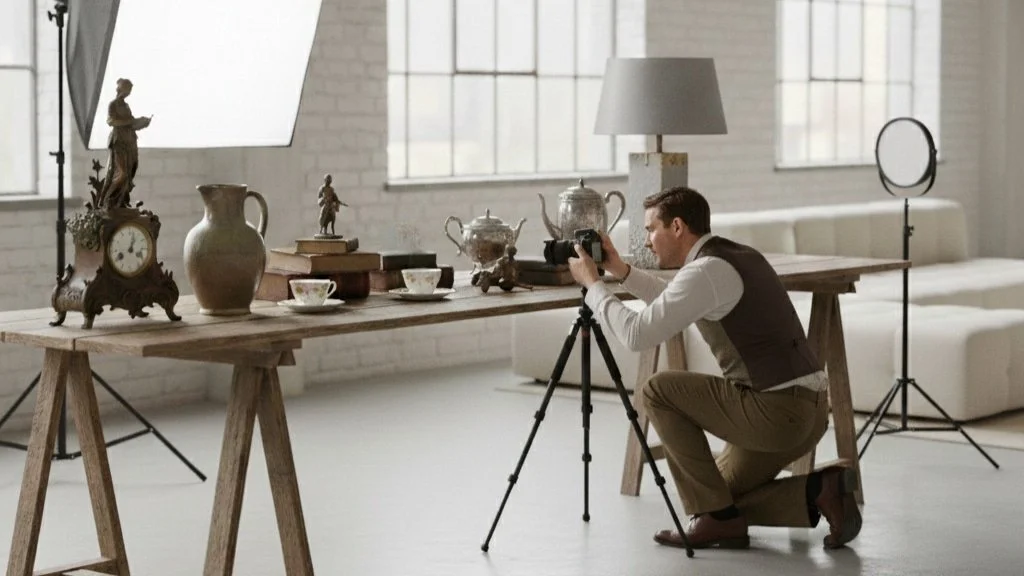
Online antiques selling rewards transparency, expertise and accurate attribution, while exposing misidentification and inflated pricing.
Is The Antiques Sector A Viable Career?
Our final most commonly asked question is …
"When you step back and look at the antiques and vintage market today, do you see this sector as a career that still has real long-term opportunity, or is it becoming more of a passion-driven industry that’s slowly fading away?"
I would argue that the antiques and vintage trade is no longer exclusively a refuge for romantics with rose tinted spectacles. It is in fact, a competitive ecosystem with commercial expectations and a high degree of cultural relevance. So, in my opinion, career opportunities still exist – if your approach is the right one! However, it’s earned through strategic acquisition, sharp branding, disciplined pricing and the use of modern communication tools. I would suggest that the era of passive income through long accumulated random stock and casual footfall has ended.
Success now depends on authority, adaptability and long-range planning.
You must understand your market, anticipate shifts, follow data and interpret consumer psychology. This is not nostalgia retail. This is commercial curation. Those who approach the antiques and vintage trade as a business with identity will thrive. Those who treat it as a sentimental vocation will struggle and eventually disappear into irrelevance and obscurity.
The future of the antiques and vintage trade favours precision, research and integrity.
It rewards intelligence, honesty and transparency.
It ignores stubbornness.
So, in answer to the question … ‘is the antiques and vintage trade still a career with long-term opportunity, or just a fading passion industry?’, my answer is …
Yes, it remains a genuine long-term opportunity — but only for those willing to adapt.
The trade hasn’t died; it has narrowed, sharpened and professionalised.
Experience and knowledge still matter, provenance remains important and good stock still sells — but the routes to market, the buyers and the expectations have changed.
Those who treat it as a business, understand modern buyers, use digital platforms intelligently and keep learning will find real opportunity.
Those waiting for the past to return won’t. The future of the trade belongs to the informed, the adaptable and the disciplined — and in my opinion, that future is very much alive.

Successful modern antiques dealers operate as curators and strategists, combining research, branding and digital communication.
Structural Change and Transformation
So, my privilege, as the blogger, is to ask a final bonus question on your behalf!
“Where is the antiques and vintage market actually heading?”
There’s no doubt the antiques and vintage sector is undergoing structural change. Demand is not disappearing; it is transforming. Buyers are shifting away from bulk furniture and moving towards pieces that offer statement value, design individuality or tactile craftsmanship. Smaller display spaces, modern housing and lifestyle minimalism have reduced appetite for oversized heritage pieces. Instead, collectors focus on objects that integrate with modern environments: for example, lighting, ceramics, art glass, decorative metal items and functional design pieces.
It’s also true that the rise of hybrid collectors — those who blend contemporary and antique — is reshaping demand.
They value contrast.
They curate emotionally but purchase strategically.
In my opinion, this hybridisation is where the strongest growth exists. Education-driven sellers will dominate future markets. Those who explain origin, context and historical relevance will outperform those who remain silent behind price tags. Trust becomes currency. Knowledge becomes positioning. The trade is not shrinking. It is selectively … well, selecting!
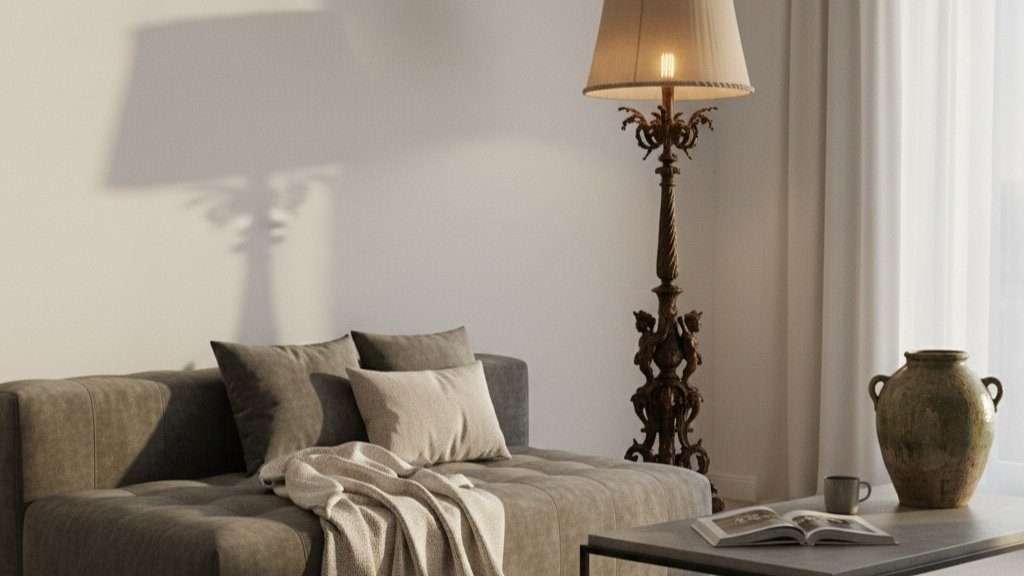
The future of the antiques market lies in hybrid collecting, where contemporary interiors integrate vintage and antique statement pieces.
My final thoughts.
The industry isn’t dying, like an old snake, it’s shedding its redundant skin. It’s discarding outdated methods and forcing evolution through pressure. Those who interpret that pressure as decline fall behind. Those who recognise it as transition move forward with strength. Of course, you can cling to the comfort of the past, repeat tired narratives and blame economics or you can recalibrate, refine, modernise and dominate your niche with knowledge, transparency and authority.
At the end of the day, the antiques and vintage market will continue to shape itself, regardless of sentiment or what you hope for. It’s not a question of whether it will survive or not. It will survive. The question is whether you are shaping your position within it.
Here is the real decision point:
Are you preserving nostalgia or engineering relevance? Because only one of those builds longevity. Only one builds authority. Only one builds profit. This is where resilience meets vision. This is where strategy outruns sentiment. This is where real opportunity lives.
And the market is watching.
It’s watching who adapts to change — not who fades quietly away.
Thanks for reading the Antiques Central Blog.
Mark Ray
If you would like to watch our YouTube video featuring this blog, click HERE.
To visit our YouTube playlist featuring antiques and vintage podcasts, click HERE.
Leave a comment below to share your memories and stories and while you’re at it, please consider subscribing to our YouTube community for more antique and vintage journeys down memory lane by clicking HERE.
