How to Determine If Your Antique or Vintage Item Is Real
Why this question matters more than most people realise
Not all antiques and vintage items are what they appear to be and understanding how to judge authenticity is essential if you want to collect with confidence rather than costly doubt.
At some point, every collector — beginner or seasoned — asks the same quiet question: “What if it isn’t genuine?”
And it’s a fair concern.
Today’s market is saturated with reproductions that look right, feel old and tell a good story. Some are honest revivals. Others are deliberately misleading. The difference between the two is rarely obvious at first glance — and the cost of getting it wrong is not just financial. It’s historical.
Authenticity matters because antiques and vintage objects are evidence. They are physical witnesses to how things were made, used, valued and lived with. Once that link is broken, the object becomes decoration — not heritage.

First, get the language right: antique vs vintage
Confusion starts here.
Antique
An antique is an object that is at least 100 years old. This is a widely accepted benchmark used by museums, auction houses and customs authorities. It has nothing to do with style or appearance.
Vintage
Vintage generally refers to items made between 20 and 99 years ago, most commonly from the 20th century. Vintage is about period character — not rarity.
A crucial definition: “vintage style” means modern. Always, no exceptions!
Authenticity is never proven by one thing
There is no single test. No magic mark. No shortcut.
Authenticity is established when multiple details agree with each other — age, materials, construction, wear and historical context all telling the same story.
When they don’t, something is wrong.
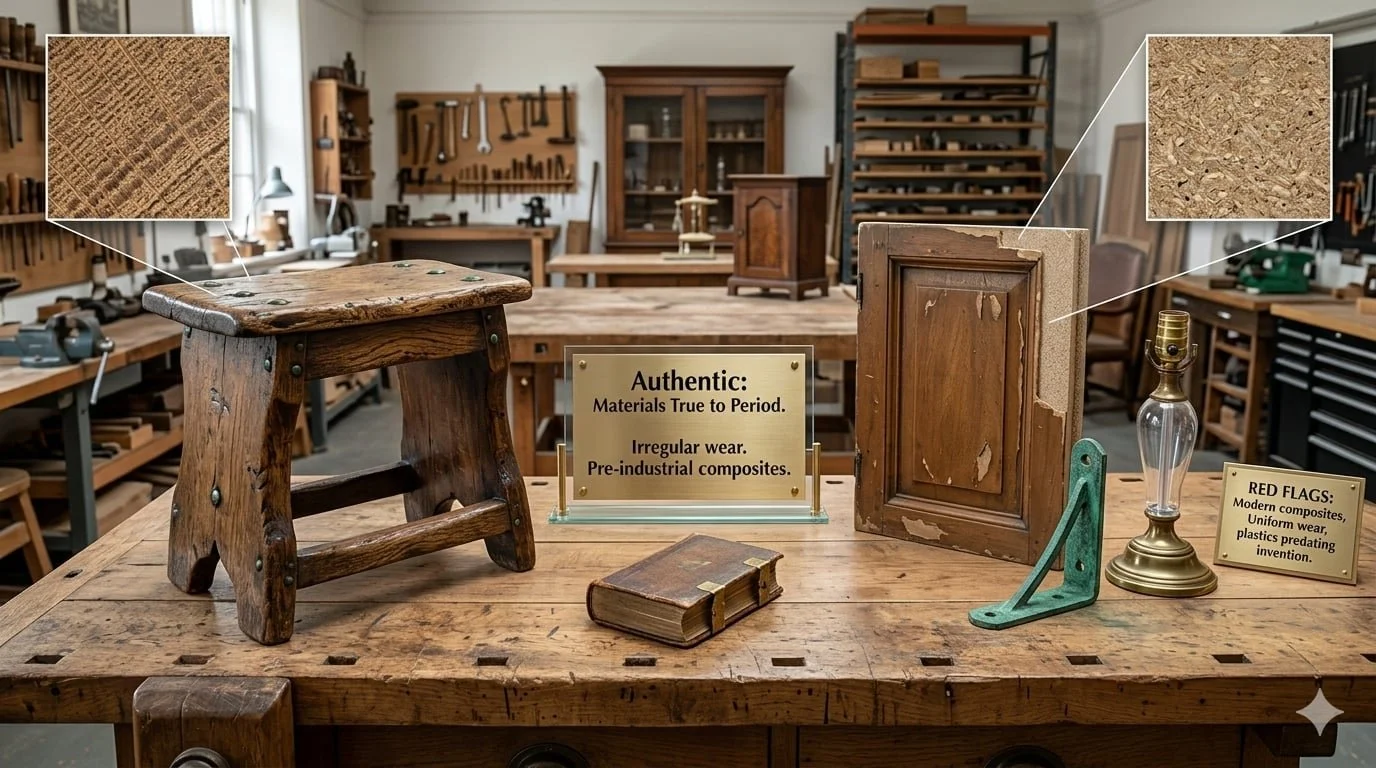
Materials: the first line of truth
Materials are brutally honest — if you know what to look for.
Ask yourself:
Was this material available at the time it claims to be from?
Was it commonly used or prohibitively expensive?
Does it age in the way I’m seeing here?
Red flags include:
MDF, chipboard or modern composites in “early” furniture
Uniform patination on metals that should wear unevenly
Plastics appearing in objects claimed to predate their invention
Materials rarely lie — people do.
Construction tells you how it was made — and why
How something is assembled often matters more than how it looks.
Genuine older items frequently show:
Hand-cut joints that are slightly irregular
Tool marks hidden underneath finishes
Evidence of repair, reinforcement or adaptation
Perfect symmetry and flawless repetition are often signs of modern machine production — not age.
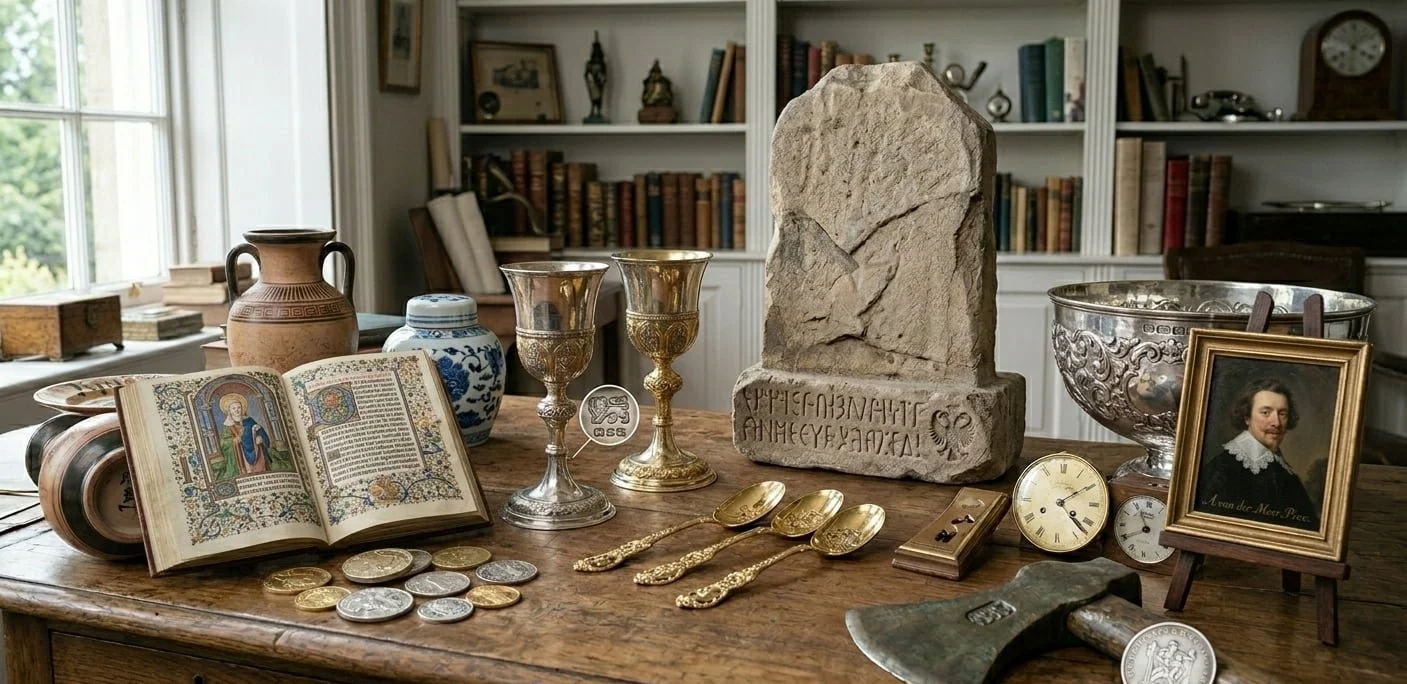
Marks, labels and signatures: helpful but dangerous
Maker’s marks, hallmarks, stamps and labels are frequently misunderstood.
Three essential truths:
Many genuine items were never marked
Marks are among the most commonly faked features
A correct mark in the wrong context is meaningless
A mark should support the object — never replace judgement.
Wear: natural use vs artificial ageing
Real age shows logic.
Look for:
Wear where hands naturally touch
Softened edges, not sharp distressing
Repairs that predate modern materials
Artificial ageing often looks theatrical — sanded corners, darkened recesses, exaggerated damage. Authentic wear is quieter and more convincing because it wasn’t trying to prove anything.
Context is the final test
Every authentic object makes sense within its time.
Ask:
Does this design align with known period styles?
Would this level of craftsmanship have been normal?
Does the object solve a real problem of its era?
If the answer feels vague or contradictory, pause for thought.
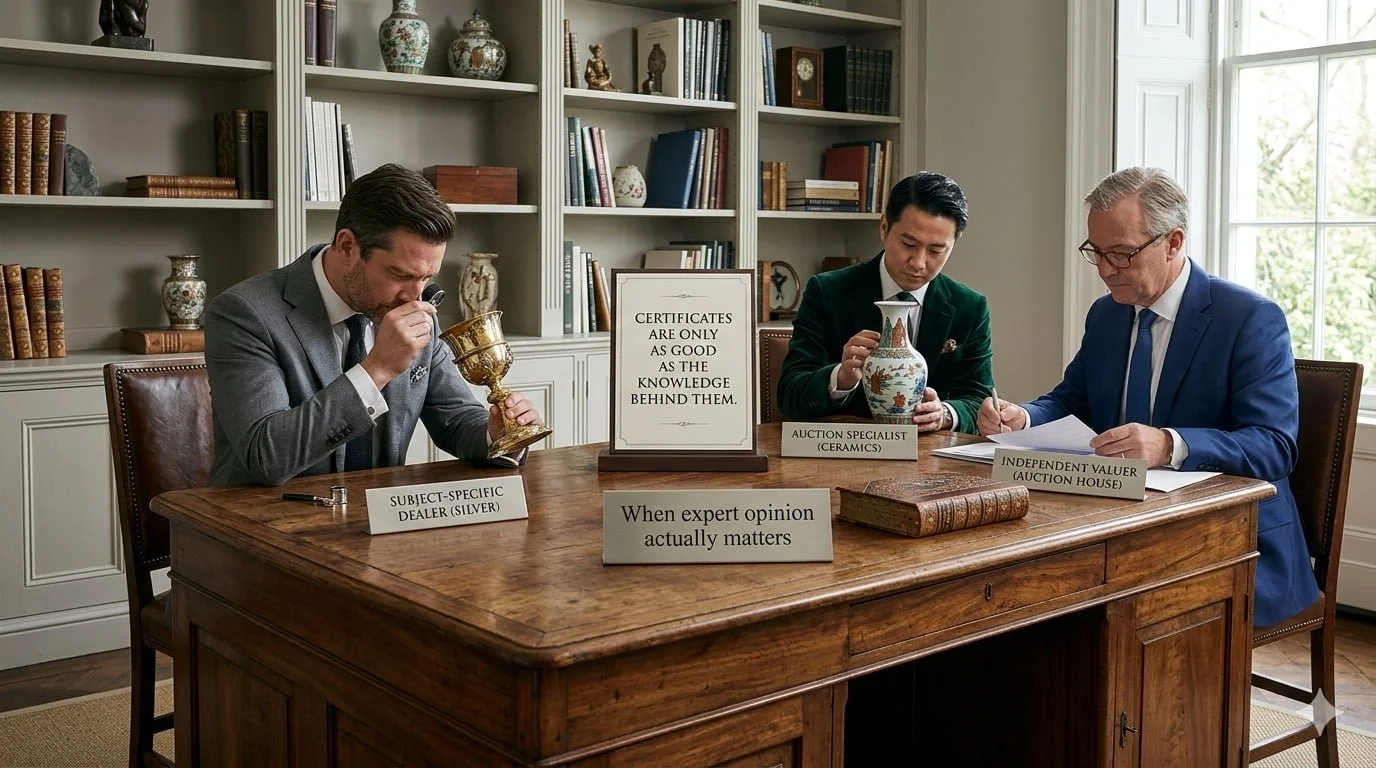
When expert opinion actually matters
For higher-value items, uncertainty should not be ignored.
Reliable help comes from:
Subject-specific dealers (not generalists)
Auction specialists with category expertise
Independent valuers such as auction houses who are not selling to you
Certificates are only as good as the knowledge behind them.
What experienced collectors learn — eventually
Stories are not evidence, provenance can be faked
Condition does not equal authenticity
Damage can support originality
Over-restoration destroys history, you only get original once
Confidence grows from repetition, not luck
Most importantly: learn one field deeply before buying widely.
Recognising Coherence
Authenticity is not about spotting flaws — it’s about recognising coherence. When materials, construction, wear and history align, the object speaks for itself.
There are no shortcuts. The more you train your eye, the less you rely on labels, sellers or stories — and the more you trust your own judgement.
If this subject resonates, continue exploring deeper guides on materials, periods and object types. In collecting, knowledge doesn’t just protect you — it defines you.
Thanks for reading the Antiques Central Blog.
Mark Ray
