Unlocking the Secrets of Selling Antiques Online

The internet has transformed the antiques and vintage trade forever. Twenty years ago, selling antiques meant paying for a shop, attending fairs at dawn, hauling heavy furniture into village halls and hoping the right buyer walked through the door. Today, a rare 1960s Danish lamp, a Victorian silver vinaigrette or a box of retro toys can reach thousands of potential buyers worldwide within minutes.
But there is a catch.
The barrier to entry is low. The competition is brutal and many sellers fail because they misunderstand one critical point: selling antiques and vintage online is no longer just about the item. It is about presentation, trust, discoverability and authority.
A dusty object sitting on a shelf is not a business.
A well-photographed, accurately described, intelligently marketed piece with provenance and story attached? That becomes desirable.
The sellers making consistent money online today are not necessarily the ones with the rarest stock. They are the ones who understand how the digital marketplaces actually work.
This guide explains exactly how to sell antiques and vintage online properly — from sourcing and pricing to photography, SEO, platforms, shipping and long-term brand building.
Antique vs Vintage: Why the Difference Matters
Before selling anything online, you need to understand the distinction between antique and vintage because buyers search differently depending on what they want.
Generally speaking:
• Antiques are usually considered items over 100 years old.
• Vintage items are typically between 20 and 99 years old.
• Retro refers to newer items made in an older style.
This matters because keywords drive online traffic.
A buyer searching for ‘Victorian antique brass candlestick’ behaves differently from someone searching ‘1980s vintage Casio watch’. If you mislabel items, your listings may never appear in search results.
Accuracy matters online because search engines and marketplaces reward relevance.
The Biggest Mistake Online Sellers Make
Most struggling sellers focus almost entirely on products.
Successful sellers focus on systems.
That distinction changes everything.
A single good antique may sell once. A repeatable system for sourcing, listing, photographing and marketing antiques creates sustainable income.
The reality is uncomfortable for some traditional dealers: expertise alone is no longer enough. The internet rewards visibility and consistency just as much as knowledge.
You can be the most knowledgeable dealer in Britain and still lose sales to someone with better photography and stronger SEO.
That is the modern market.
Choosing the Right Selling Platform
Every online selling platform attracts different buyers, fees and expectations. The platform you choose affects your profit margins, audience quality and workload.
eBay
eBay remains the largest and most accessible antiques marketplace online.
Advantages:
• Massive global audience
• Fast listing process
• Strong search traffic
• Auction and Buy It Now formats
• Ideal for collectibles and lower-to-mid value items
Disadvantages:
• Heavy competition
• Fees can become substantial
• Buyers expect competitive pricing
• Increased return expectations
eBay works particularly well for:
• Toys
• Coins
• Militaria
• Vintage electronics
• Watches
• Advertising items
• Mid-century collectables
• Vinyl records
If you are starting out, eBay remains one of the best training grounds because it teaches pricing discipline and market reality quickly.
Etsy
Etsy attracts buyers looking for curated vintage aesthetics and decorative appeal.
It performs especially well for:
• Mid-century modern
• Retro home décor
• Vintage clothing
• Rustic farmhouse pieces
• Jewellery
• Decorative ceramics
However, Etsy buyers often care more about styling and presentation than technical detail.
A beautifully staged photograph can outperform a technically superior antique with poor presentation.
Your Own Website
Having your own website gives long-term stability.
The major advantage is control.
You control:
• Branding
• SEO
• Customer relationships
• Email lists
• Pricing
• Policies
• Advertising
Without your own website, you are effectively building your business on rented land.
Marketplaces can change algorithms, increase fees or suspend accounts overnight.
A well-structured website builds authority over time and can eventually become your most valuable digital asset.
For antique dealers, niche authority websites perform particularly well because Google rewards expertise and specialist content.
Why SEO Matters More Than Most Dealers Realise
SEO — Search Engine Optimisation — determines whether people can actually find your items online.
Many antique sellers completely neglect this.
That is a serious mistake.
A beautiful listing hidden on page seven of Google may as well not exist.
Strong SEO begins with understanding buyer intent.
People rarely search:
• ‘Nice old vase’
They search:
• ‘Art Deco Clarice Cliff vase’
• ‘1930s Burleigh ware’
• ‘Victorian cranberry glass’
• ‘1960s G Plan coffee table’
Specificity drives traffic.
The more accurately you identify and describe items, the more likely buyers are to find them.
How to Write Antique Listings That Actually Sell
The description is not filler.
It is sales psychology.
A strong listing does four things simultaneously:
1. Builds trust
2. Answers buyer questions
3. Improves SEO
4. Creates emotional desire
Most weak listings fail because they are vague.
Bad example:
‘Old vintage clock in good condition’.
Strong example:
‘Original 1930s Smiths Enfield oak mantel clock with silvered dial, Art Deco styling and eight-day movement. Displays beautifully with age-related patina consistent with genuine period use’.
See the difference?
The second description creates confidence and imagery.
Good antique descriptions should include:
• Age
• Materials
• Maker
• Measurements
• Style period
• Condition
• Provenance if known
• Restoration details
• Defects
• Functional status
Transparency reduces returns and builds credibility.
Photography: The Single Biggest Sales Multiplier
Poor photography destroys value perception instantly.
Online buyers cannot physically inspect items. Your photographs become the inspection.
That means photography is not optional decoration. It is your sales floor.
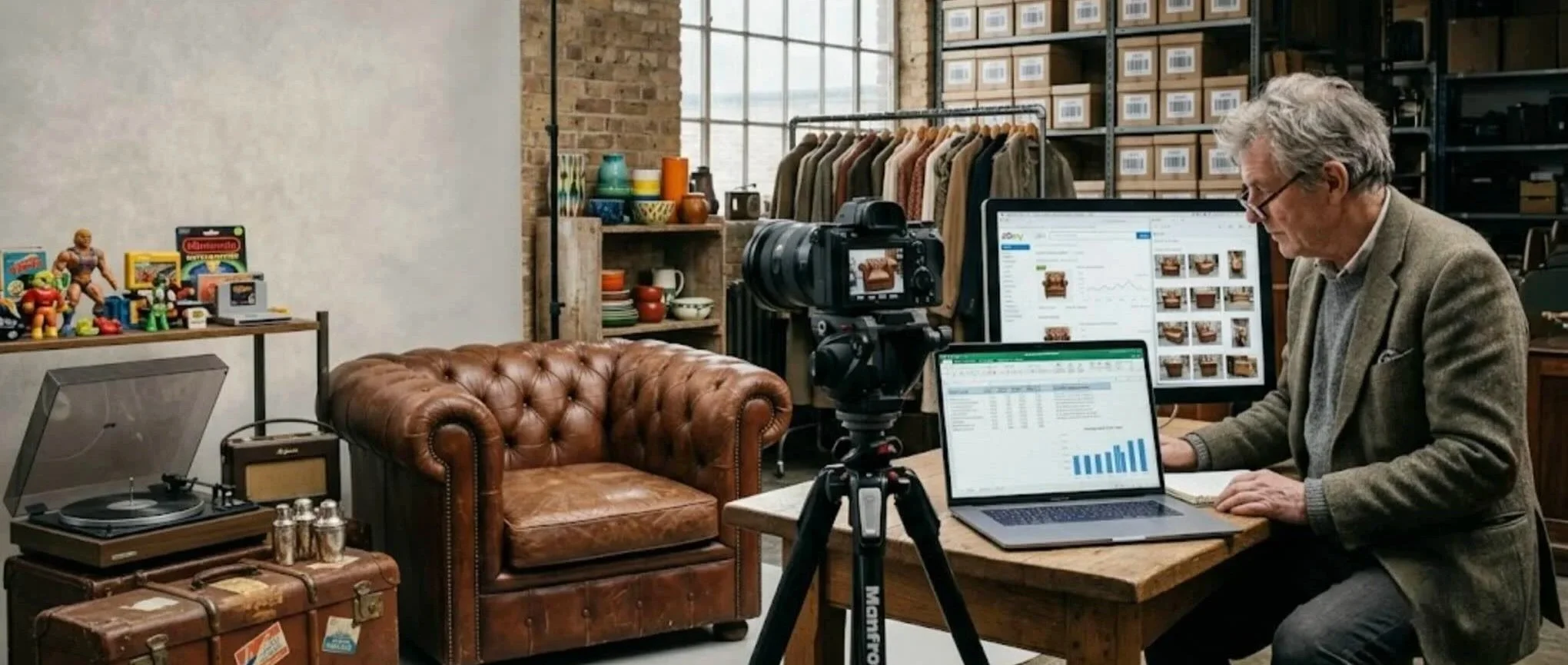
Good antique photography requires:
• Natural lighting
• Neutral backgrounds
• Sharp focus
• Multiple angles
• Close-ups of details
• Honest defect photography
The highest-performing antique listings usually include between 8 and 20 images.
Serious buyers want evidence.
Interestingly, overly edited photographs can reduce trust. Buyers of antiques generally prefer realism over artificial perfection.
A slightly worn leather chair photographed honestly will often sell faster than one processed so heavily it looks fake.
Why Storytelling Increases Antique Sales
People do not just buy objects.
They buy identity, nostalgia, memory and emotional connection.
A 1970s record player is not simply electronics.
For one buyer, it represents youth.
For another, family memories.
For someone else, interior design aesthetics.
Good sellers understand emotional framing.
This does not mean inventing fake history or exaggerating provenance. It means contextualising the item intelligently.
Instead of:
‘Vintage suitcase’.
You might say:
‘Classic mid-century travel case with original airline labels, evocative of post-war European rail and air travel’.
That creates atmosphere.
Atmosphere sells.
Pricing Antiques Correctly
Pricing is where many dealers struggle emotionally.
Some become emotionally attached to stock.
Others rely on outdated ‘book values’.
Some simply guess.
The market does not care what you paid.
The market cares what buyers will pay now.
That distinction matters enormously.
Correct pricing requires:
• Sold listings analysis
• Condition comparison
• Rarity assessment
• Market trend awareness
• Shipping consideration
• Platform fee calculation
One of the best tools available remains completed sales searches on eBay because it reflects real-world buyer behaviour rather than optimistic asking prices.
Many antiques sit unsold online for years because sellers price according to hope rather than evidence.
The Hidden Power of Niche Specialisation
General antique dealers can survive online.
Specialists usually perform better.
Why?
Because specialists build authority faster.
If your entire website and social presence revolves around:
• Vintage bicycles
• Retro gaming
• Art Deco lighting
• Railwayana
• Mid-century furniture
- then buyers begin associating you with expertise.
Expertise builds trust.
Trust increases conversions.
Conversions improve visibility.
This becomes a compounding effect.
The internet rewards focused authority far more than broad mediocrity.
Shipping: The Area That Can Destroy Profit
Shipping is where many online antique businesses quietly lose money.
Heavy, fragile or awkward items can become logistical nightmares.
Before listing anything online, calculate:
• Packaging cost
• Courier fees
• Insurance
• Damage risk
• Return risk
Some categories perform brilliantly online because they ship easily:
• Jewellery
• Coins
• Watches
• Small collectibles
• Postcards
• Cameras
Others require careful consideration:
• Furniture
• Mirrors
• Ceramics
• Glass
• Large artwork
A profitable sale can become a loss instantly if poor packaging results in damage.
Professional packaging matters enormously in the antiques trade because reputation travels quickly online.
How Social Media Changed the Antiques Trade
Social media has effectively become the modern antiques fair.
Platforms like Instagram, YouTube and TikTok now drive enormous buying behaviour.
The biggest shift is this:
People increasingly buy from personalities and trusted curators, not just anonymous shops.
This is why content marketing matters.
A dealer explaining:
• How to identify fake silver
• Why certain toys became collectible
• The history of Bakelite radios
• How to spot reproduction furniture
- builds audience trust long before asking for a sale.
Education becomes marketing.
That is one reason YouTube works exceptionally well for antiques and vintage sellers. Viewers become emotionally invested in the dealer’s expertise and journey.
Why Authenticity Matters More Than Ever
The online antiques market has a growing trust problem.
Reproductions, AI-generated descriptions, misleading claims and mass-produced “vintage style” goods have made buyers more cautious.
That creates opportunity for honest sellers.
Authenticity now becomes a competitive advantage.
Good sellers openly show:
• Wear
• Repairs
• Restoration
• Damage
• Imperfections
Ironically, imperfections often increase trust because they prove realism.
Collectors are generally more comfortable buying from someone transparent than from someone presenting every object as flawless museum quality.
Understanding Buyer Psychology
Online buyers usually fall into several categories:
Collectors
Collectors value rarity, condition and authenticity.
Interior Design Buyers
These buyers care more about visual impact and styling.
Nostalgia Buyers
They buy emotional memory and cultural connection.
Investors
They focus on scarcity, trend growth and resale potential.
Casual Buyers
These buyers purchase primarily for decoration or curiosity.
Understanding which audience you are targeting changes how you market the item.
A rare enamel sign aimed at collectors requires detailed condition reporting.
The same sign aimed at decorators may benefit more from atmospheric photography.
Why Consistency Beats Occasional Brilliance
Many sellers list heavily for a week, disappear for a month, then wonder why sales slow down.
Online platforms reward consistency.
Frequent listing activity signals relevance to algorithms.
Consistency improves:
• Search ranking
• Audience retention
• Brand visibility
• Returning customers
• SEO performance
A steady flow of quality listings usually outperforms random bursts of activity.
The antique trade has always rewarded persistence. Online selling is no different.
The Importance of Building an Email List
Most antique dealers ignore email marketing.
That is a mistake.
An email list is one of the few online assets you truly own.
Social platforms can change overnight.
Algorithms fluctuate constantly.
Search rankings rise and fall.
An email subscriber list remains yours.
Even a modest mailing list of engaged buyers can produce repeat sales consistently.
Effective antique email newsletters might include:
• New arrivals
• Recent finds
• Educational articles
• Restoration stories
• Market trends
• Fair reports
People interested in antiques often enjoy the narrative surrounding the objects just as much as the objects themselves.
Common Mistakes That Kill Online Antique Businesses
Several patterns appear repeatedly among struggling sellers.
Weak Photography
Dark, blurry or cluttered images destroy confidence immediately.
Overpricing
Emotional pricing prevents stock turnover.
Poor Packaging
Damage and negative feedback ruin reputation quickly.
Inconsistent Listings
Platforms reward activity and consistency.
Misidentification
Incorrect dating or attribution damages credibility.
Ignoring SEO
Without search visibility, products remain invisible.
No Branding
Random unconnected listings rarely create long-term loyalty.
Should You Sell Cheap or Expensive Antiques?
There is no universal answer.
However, lower-priced items often create faster cash flow online.
Many successful dealers use a mixed strategy:
• Fast-moving lower-value stock for consistent turnover
• Higher-value statement pieces for profitability
Cash flow matters.
A dealer sitting on £50,000 worth of unsold stock is not necessarily more successful than someone consistently turning smaller profits weekly.
Liquidity matters in business.
Why Content Marketing Is Becoming Essential
The future of online antiques selling increasingly belongs to sellers who combine commerce with education and entertainment.
People trust knowledgeable specialists.
That means:
• Blogs matter
• YouTube matters
• Social proof matters
• Expertise matters
A website containing valuable antique-related content performs far better in Google than a website containing only product listings.
Google increasingly rewards:
• Helpful information
• Authority
• Original expertise
• Trustworthiness
This creates a huge opportunity for knowledgeable dealers willing to share what they know.

AI and the Future of the Antiques Trade
Artificial intelligence is already changing online selling.
AI can help with:
• Drafting descriptions
• SEO suggestions
• Translation
• Image enhancement
• Market analysis
But there is also danger.
Generic AI-written listings often sound lifeless and repetitive. Experienced collectors can spot them instantly.
The winning formula is likely to be:
• Human expertise
• Human storytelling
• Human trust
combined with
• AI efficiency tools
Technology should support expertise, not replace it.
Final Thoughts
Selling antiques and vintage online successfully is no longer simply about owning interesting objects.
It requires:
• Research
• Photography
• SEO
• Psychology
• Logistics
• Consistency
• Branding
• Trust
The dealers thriving online today understand something fundamental:
They are not merely selling old things.
They are selling history, craftsmanship, nostalgia, identity and emotional connection in a digital world overflowing with disposable products.
That gives antiques and vintage goods a unique advantage.
In an age of mass production and algorithmic sameness, genuinely old objects still possess something technology cannot replicate easily: authenticity.
And always know that authenticity, increasingly, is what people are searching for.
Good luck with you online antiques adventure and let me know how you get on in the comments below.
Thanks for reading the Antiques Central Blog.
Mark Ray
Visit our YouTube playlist featuring antiques and vintage podcasts↗︎
Leave a comment below to share your opinions, memories and stories.
Please consider subscribing to our YouTube community for more antique and vintage journeys↗︎
